

Soo Line: Little Towns of Iowa, Gone but Not Forgotten THE LATE, GREAT ZANETA
By Soo Greiman
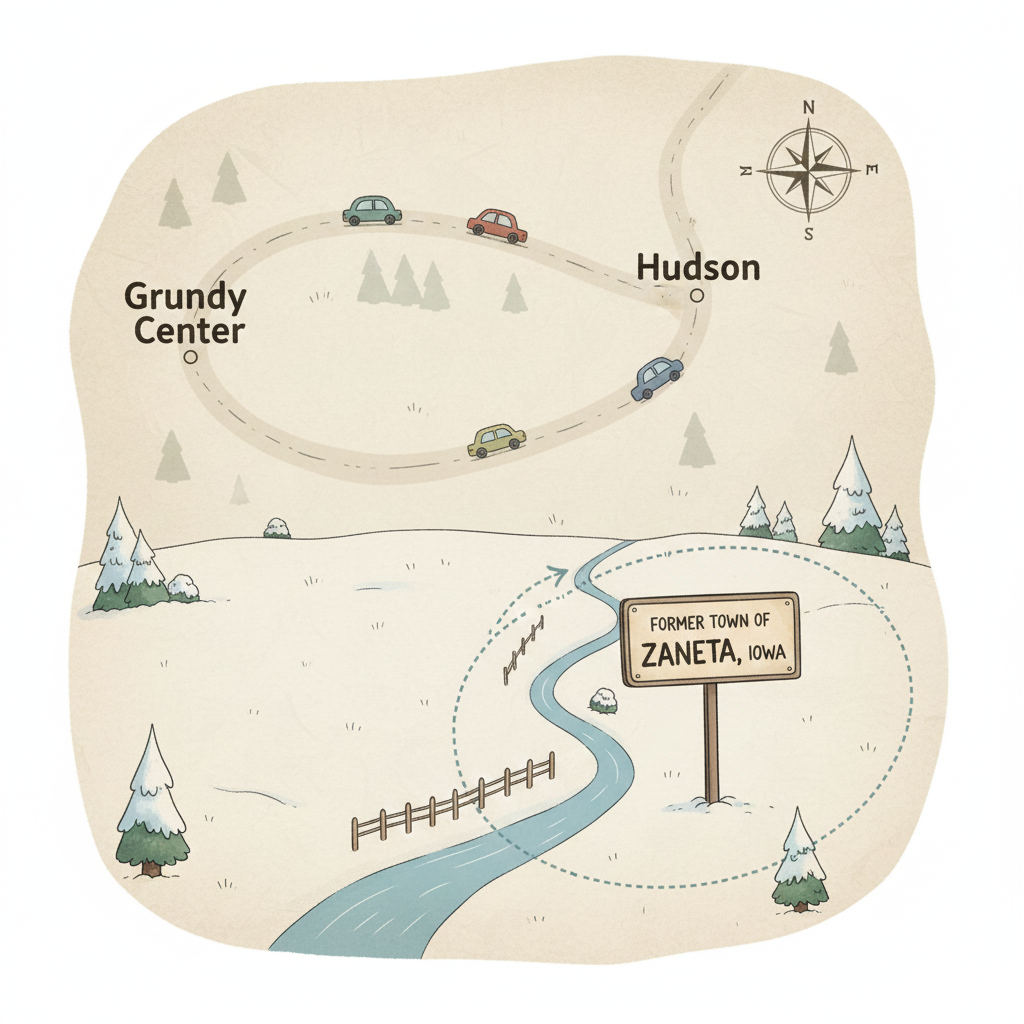
Old stories of once-thriving but now long-gone small towns of Iowa are fascinating. Maybe my fascination with them comes from living near one. Yes indeedy, I live just north of Jockeytown, which was situated at the intersection of Holmes Road and North Eldora Road. As the story goes, this tiny village, a mile from Hudson formerly consisted of a 1-room schoolhouse, creamery, gas station, and church on the curve of old Highway 63 (now Eldora Road north). Besides Jockeytown, I love hearing stories about other tiny towns like Hicks (west of Hudson) a tiny map-dot that once hoped to secure a railroad stop but then lost out to Hudson. And there used to be Mid-Way Station, just several buildings and a gas station at the former intersection of Highway 63 and Highway 175 to Reinbeck. Lots of tiny towns managed to stay in business around Iowa in the years before everyone had cars. As a kid riding shotgun with my Dad when he would deliver Duroc boars or gilts to farmers, we’d make stops at other small towns like Finchford or Jubilee for a bottle of pop.
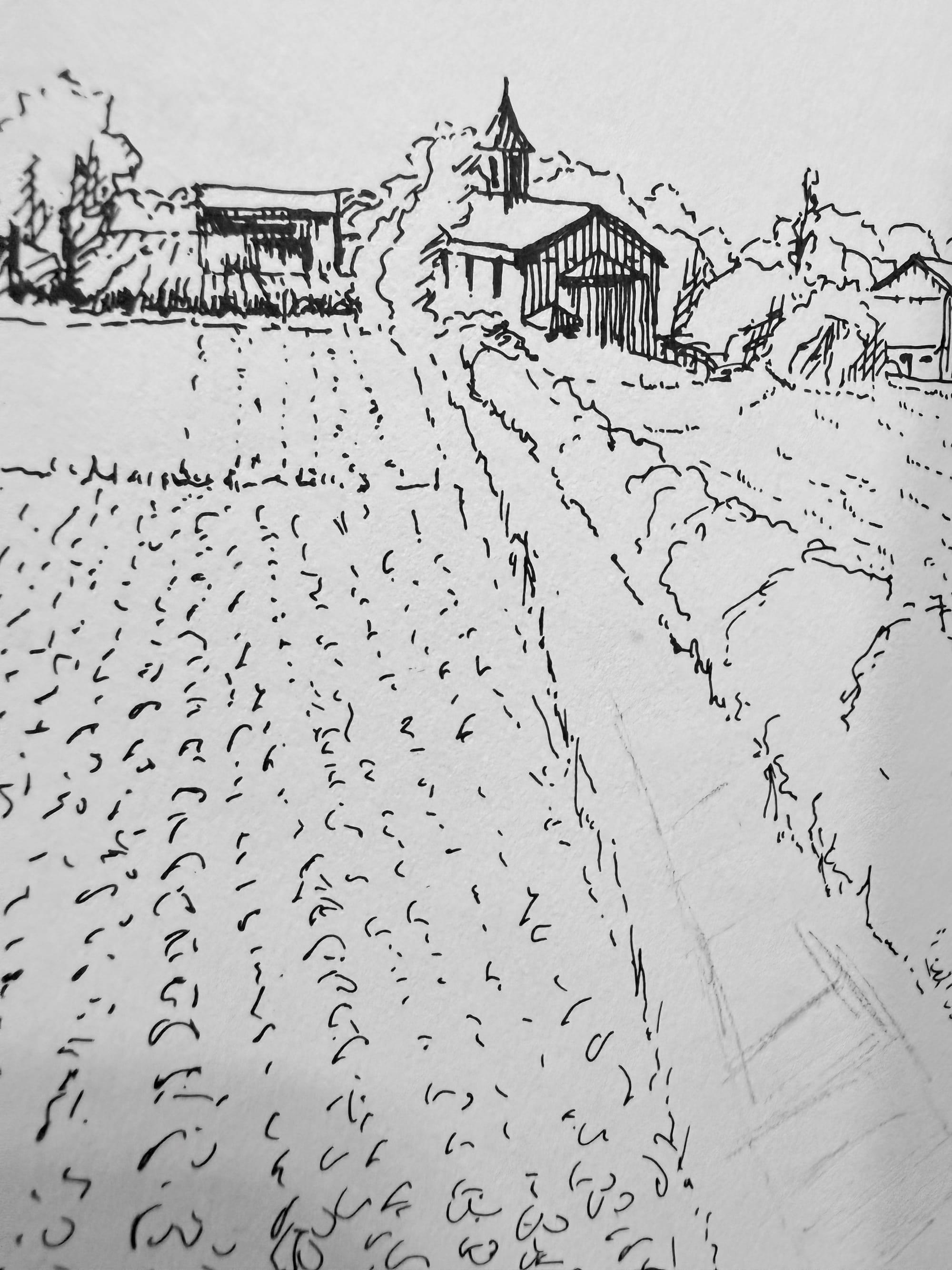
For reasons tied to the economy or who got the railroad spur, people moving or businesses closing, most of these small towns dried up and disappeared. Left with only building foundations, trees would take over. While it wasn’t quite seen as a phoenix rising from the ashes, fortunately for Jockeytown, someone purchased its’ few acres and tangle of trees several years ago from a farmer, making it possible for a nice residence and outbuildings to be built on it.
I was captivated when Lynn (Pete) Petersen, former teacher at Hudson High recently posted a short piece about Zaneta, another small town that has all but disappeared. I had to ask him about it. “I’m a Zaneta native.” He laughed, telling how his family. Dad, mom and all the Petersen kids lived there. Zaneta, he remembered, was their hometown. But it didn’t last long, since when Lynn (Pete) turned 3, the family pulled up stakes, to relocate to Minnesota.
The piece Pete wrote about Zaneta had been handed to him by Lyle Wulf, jokingly referred to as ‘the Mayor of Zaneta’ who lived nearby. Many years ago Lyle drove his truck for the grain company store, working along another trucker, his father, Freddie. “We played a lot of cards in that office and my mother, Bernice (Dufel) Wulf used to teach in Zaneta’s small school. At one time all the farmhouses along Zaneta Road were lived in by different members of the Dufel family. There were a lot of them!”
Excerpts compiled by the Grundy County Historical Society which Petersen quoted stated, “There is a stretch of road called Zaneta Road, and if you didn’t already know what once stood there, you wouldn’t guess it from the landscape. A few farmhouses still line the road, but the town of Zaneta is mostly gone. Officially faded from most maps by 1970, though its decline had been going on more than half a century.
Zaneta, founded in 1901 built up fast, the kind of town that sprang to life with the coming of the railroad. It never grew large enough to threaten Reinbeck, Dike or Hudson but it was not insignificant. By the time the Chicago & North Western line was humming with trains, Zaneta had the standard slate of early 20th century essentials: a general store, a lumber and grain company, railroad depot, stockyards, harness shop, church school even a dance hall. In its own quiet way it served a sizable ring of farm families living nearby who preferred to stop for mail, feed and basic goods.
By mid-century though, Zaneta was caught in the same slow slide that erased so many rural communities. By the 1960’s lifelong resident Raymond Dufel was blunt: the town had never had more than 15 residents at once, and only 9 remained, mostly members of the Dufel and Wulf families. The depot was gone. The school had been turned into a house for younger generations of Dufels. Every other original building had vanished.
The final blow likely came in 1969 when the Checkerboard grain elevator, the last operating business in Zaneta, closed its doors. Purina tried to sell it but found no takers. For a place that once had 6 streets, all beginning with the letter Z, the end felt matter-of-fact. The railroad, once running two or three trains a day, including a passenger run, was down to a couple of weekly freights. Even the track crew had dwindled to two men who covered it’s 19 miles. A windstorm tore through the town shortly before the elevator shut down, scattering debris and knocking loose a sign someone had nailed up years before, “ZANETA. Mighty small and mighty quaint. Town is-people ain’t”. It was an unintentionally fitting epitaph.
Today, little remains of the community that was platted with hope and a curious assortment of Z names for streets. The plat, and most of the buildings are gone. But the road is still there-Zaneta Road, stretching through farmland that once held a compact little town with just enough commerce, noise and neighborly bustle to matter to the people who depended on it.”

Comments ()