

Hamilton murder trial continues with cross-examination, scene mapping analysis
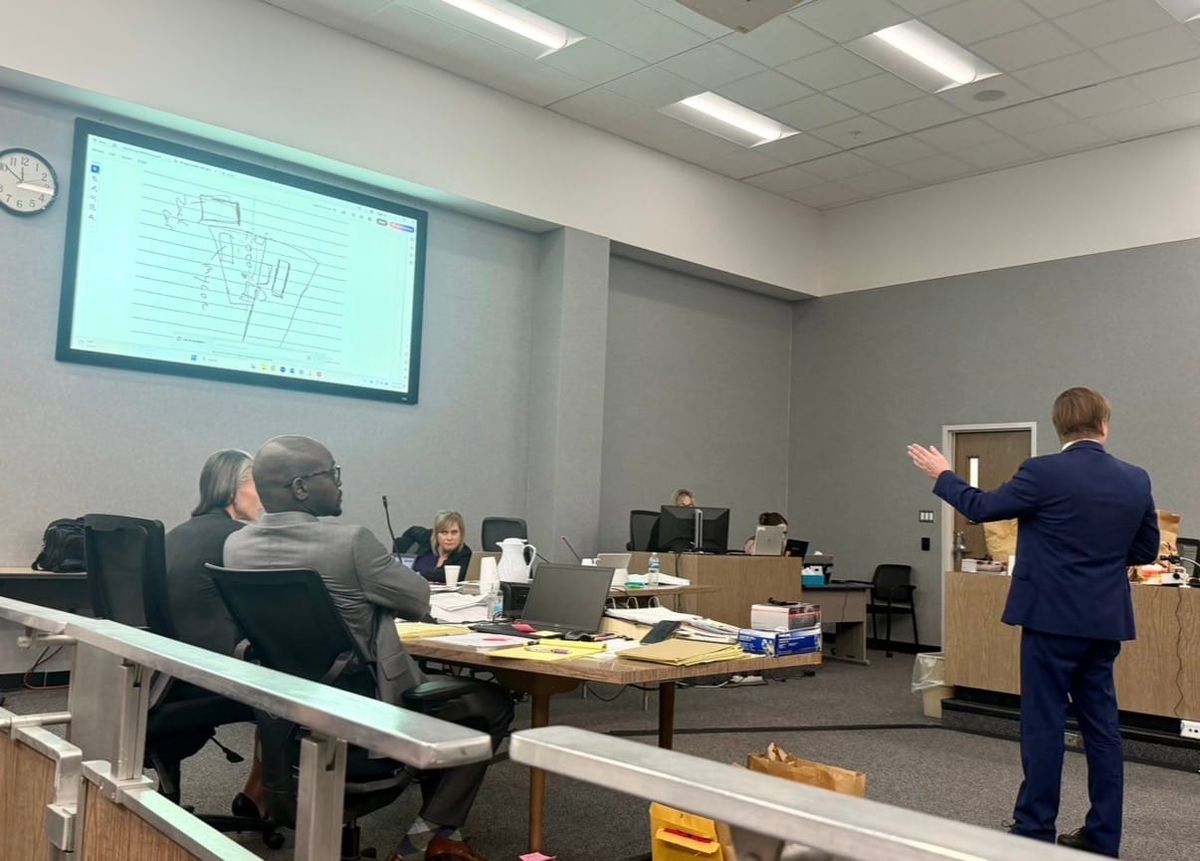
Jurors in the first-degree murder trial of Jacob Leigh Hamilton heard continued testimony Tuesday, May 19, 2026 from Black Hawk County Sheriff’s Office Detective Mark Herbst, with much of the day focused on cross-examination regarding Hamilton’s recorded police interview and investigators’ comparison of witness statements against physical evidence collected following the July 2024 shooting death of Zachary Drinovsky in Hudson.
Defense attorney Konrad Kamizelich spent much of the morning questioning Herbst about statements Hamilton made during an approximately three-hour interview conducted several hours after the shooting.
The shooting occurred around 3:35 a.m., while Hamilton’s interview with investigators began approximately five hours later at the sheriff’s office. Herbst explained that investigators conduct interviews soon after incidents while details remain fresh and to document injuries, clothing, and other observations. Jurors viewed photographs of Hamilton’s hands, face, ears, and clothing taken following the shooting. The detective noted Hamilton had blood on both knees, though investigators did not observe blood spatter on his shirt.
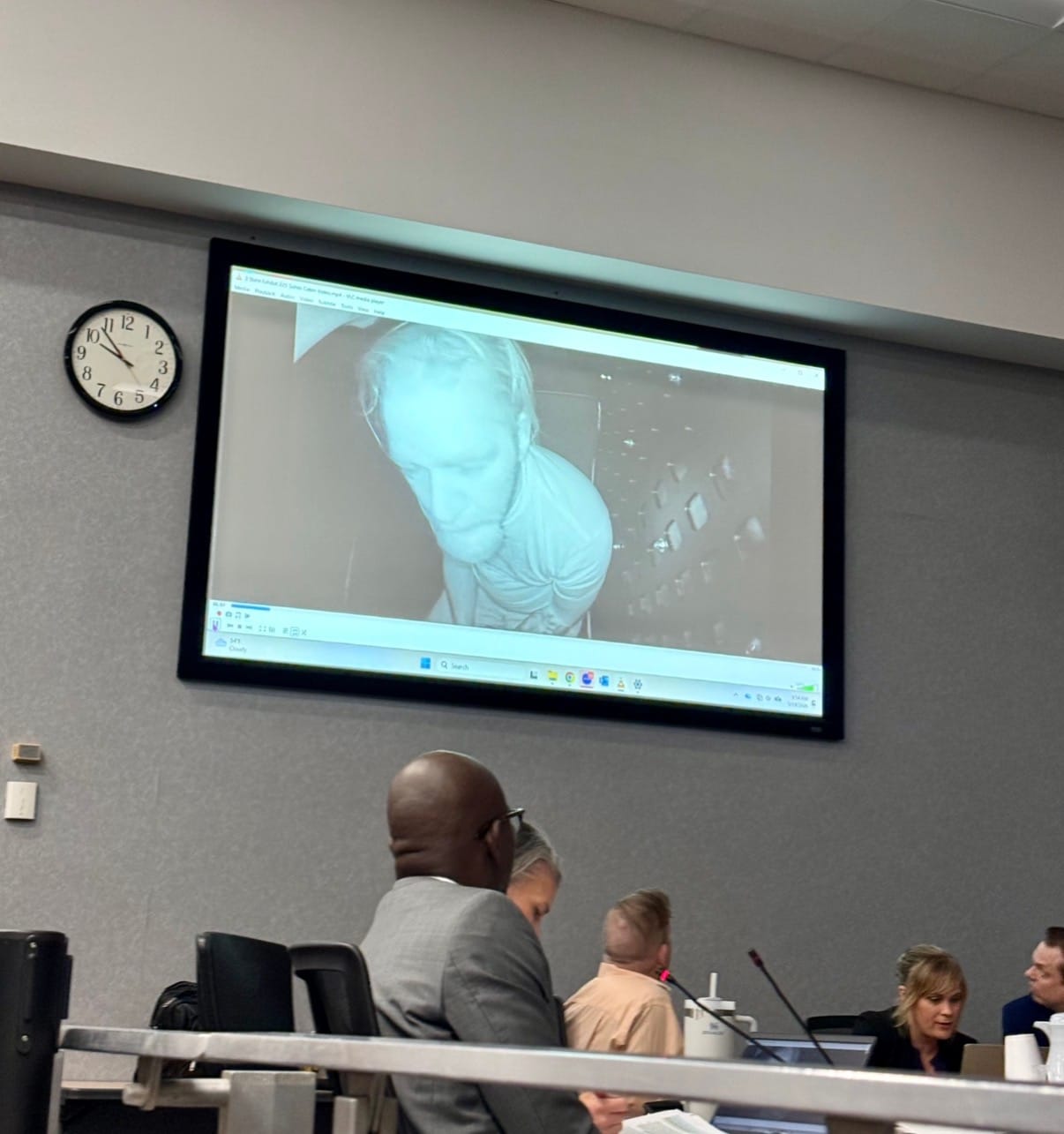
Jurors also viewed portions of video footage showing Hamilton in the back of a Hudson Police Department patrol vehicle following the shooting. Herbst pointed out Hamilton could be seen pulling on the collar of his shirt while a police K-9 barked from the rear portion of the vehicle.
A significant portion of the cross-examination centered on whether the recovered shell casing locations matched Hamilton’s account of his movements. During the interview, Hamilton stated he was attempting to push his dog toward the apartment door when the shooting occurred, initially describing himself as being near the apartment ramp. Kamizelich repeatedly questioned Herbst about Hamilton expressing uncertainty regarding his exact location. Herbst acknowledged that while Hamilton stated multiple times he could not be completely certain where he was standing, he consistently maintained he was moving toward the door while handling the dog. However, Herbst noted investigators questioned whether the shell casings were consistent with Hamilton remaining near the ramp. Hamilton later acknowledged during the interview that he may have been positioned farther from the ramp area than he initially described.
Jurors learned Hamilton told investigators he never saw a firearm on Drinovsky, though he stated he feared Drinovsky was going to kill him. Hamilton also searched near Drinovsky for a firearm following the shooting but did not find one.
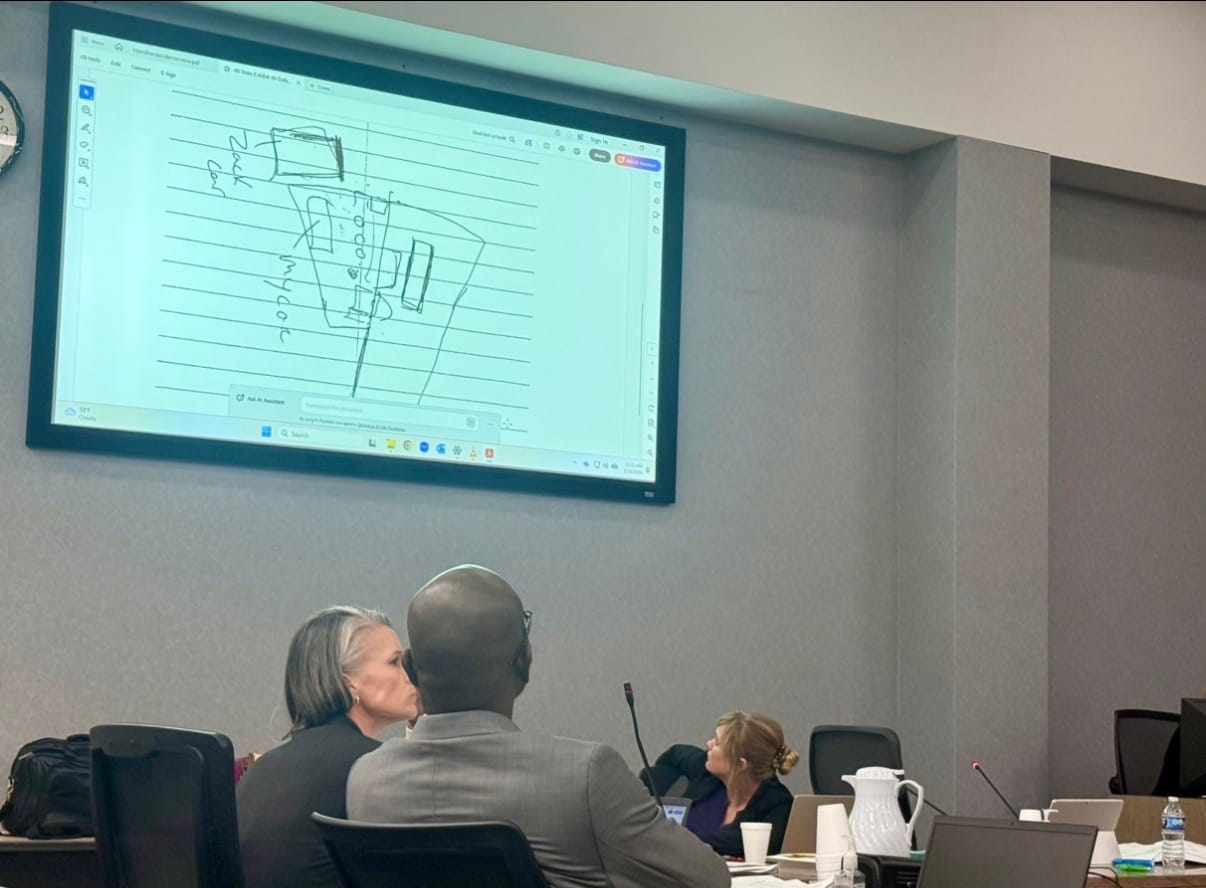
Jurors were shown a hand-drawn diagram created during Hamilton’s interview with investigators that was referenced throughout cross-examination regarding vehicle placement, garbage cans, grills, and shell casing locations outside the apartment complex. Kamizelich questioned Herbst extensively about whether Hamilton could have been positioned near his vehicle while still moving toward the apartment entrance. Questioning also focused on Hamilton’s statements that he never went beyond certain areas near the garbage cans and grills located along the driveway.
Kamizelich also questioned Herbst about the difficulty of recalling exact details during a stressful event occurring in darkness during the early morning hours. Herbst agreed visibility would have been more difficult at night, though he explained investigators compare witness statements against physical evidence when evaluating consistency during an investigation.
Additional questioning focused on Hamilton’s statements regarding Drinovsky’s movements immediately before the shooting. According to testimony, Hamilton stated he believed Drinovsky may have entered his vehicle and at one point remembered seeing brake lights.
The defense additionally questioned Herbst regarding the sequence of witness interviews conducted throughout the investigation. Herbst confirmed he interviewed Abigail Oglesbee the night of the shooting and later spoke with her again several days afterward after she contacted investigators. He also noted he first interviewed Emily Drinovsky on July 23, after multiple interviews had already been conducted with Oglesbee.
During redirect examination, prosecutors focused on Herbst’s testimony that Hamilton’s explanation of his location evolved after investigators questioned him about shell casing evidence recovered at the scene.
Jurors later heard testimony from Iowa State Patrol Trooper Eric Payne, who presented forensic scene mapping analysis related to the shooting scene.
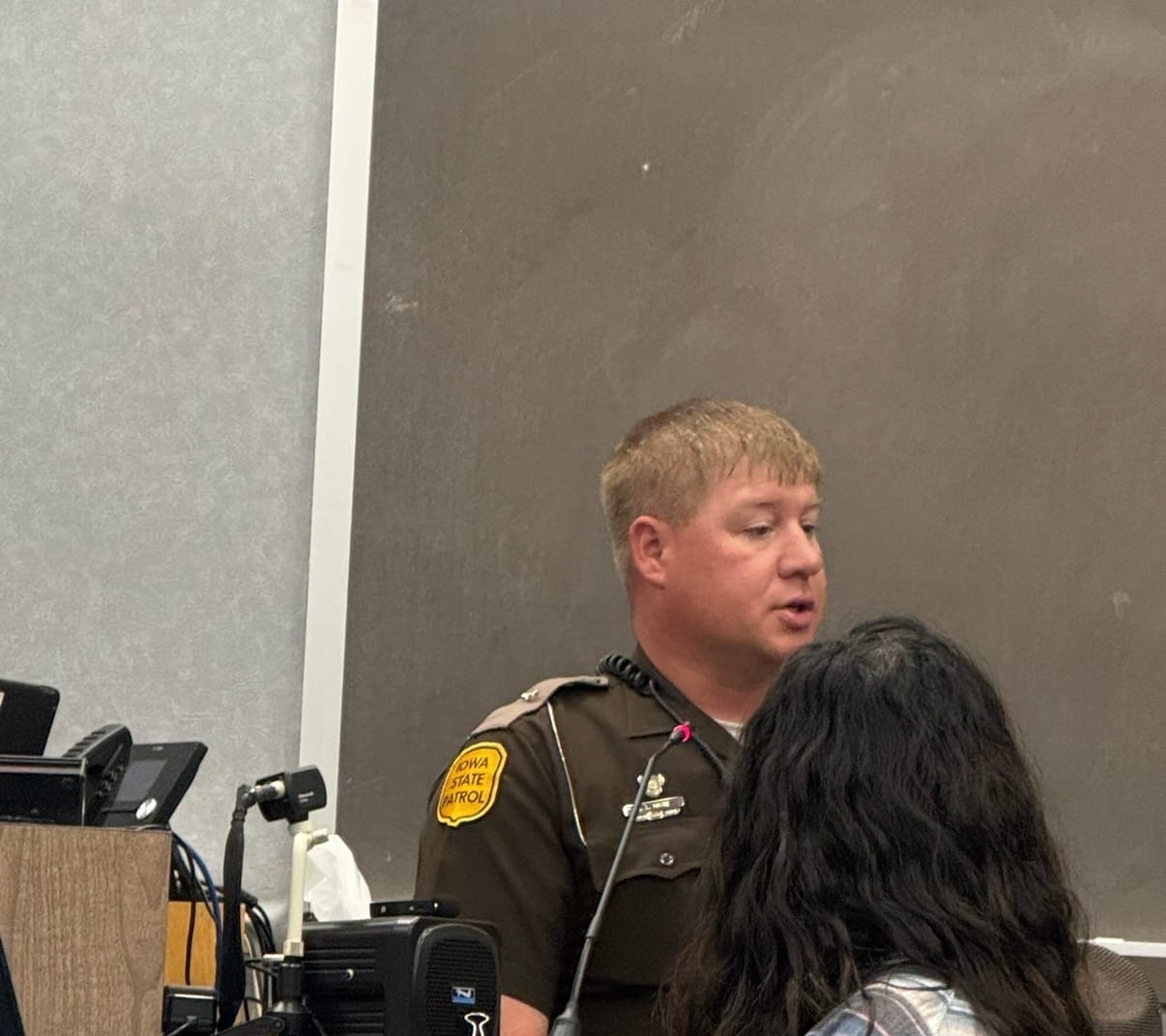
Payne stated he has served with the Iowa State Patrol for approximately 20 years and works in collision reconstruction and scene mapping. Defense attorney Nicole Watt objected at the beginning of Payne’s testimony regarding his qualifications to testify as an expert witness. The objection was overruled by the court.
According to testimony, Payne used a Trimble laser-mapping system and forensic mapping analysis to examine investigative data related to shell casing locations, trajectory patterns, and scene measurements connected to the shooting outside Hamilton’s apartment. Jurors were shown computer-generated demonstrative exhibits created from the analysis. Payne explained the exhibits were intended to help visualize aspects of the investigative data rather than replace the underlying evidence itself.
Payne’s analysis incorporated shell casing locations, scene measurements, and trajectory rods placed within bullet holes found in Drinovsky’s Chevrolet Equinox. The trooper stated the shell casing locations were not consistent with casings being ejected from directly near the apartment doorway. However, he acknowledged the analysis could not determine the shooter’s exact location.
Instead, Payne concluded the physical evidence was more consistent with the shooter being positioned farther down the driveway and closer to Drinovsky’s vehicle than directly near the apartment entrance.
Payne’s testimony was expected to continue Wednesday.
Comments ()